
As professionals move into senior management and leadership positions, many begin looking for advanced qualifications that can strengthen their expertise, credibility, and career growth opportunities. One qualification that has gained significant popularity among experienced professionals is the DBA from Rushford Business School.
Unlike traditional doctoral programs that primarily focus on academic research, a DBA is designed for working professionals who want to apply advanced business knowledge to real-world organizational challenges.
Among the various DBA providers available today, Rushford Business School has attracted attention for its flexible learning approach and professional-focused curriculum.
If you are wondering how to pursue a DBA from Rushford Business School in 2026, this guide will help you understand the admission process, eligibility requirements, learning structure, and potential career benefits.
What is the Rushford DBA?
The Rushford DBA is a professional doctoral program designed for experienced professionals, entrepreneurs, managers, consultants, and business leaders.
The program focuses on advanced business research, leadership development, strategic management, innovation, and organizational decision-making.
Unlike a PhD that often prepares candidates for academic careers, the DBA focuses on solving practical business problems and improving leadership capabilities.
This makes it particularly suitable for professionals who want to continue working while pursuing doctoral-level education.
Why Professionals Choose a DBA
Many professionals pursue a DBA because they want to strengthen their leadership expertise and gain advanced business knowledge without leaving their careers.
A DBA can help professionals improve strategic thinking, research capabilities, decision-making skills, and organizational leadership understanding.
Another important advantage is professional credibility.
Holding a doctoral qualification often enhances an individual’s profile and can support career progression into senior management and executive leadership roles.
As businesses become increasingly complex, organizations value leaders who combine practical experience with advanced academic knowledge.
Eligibility Requirements
Before applying for a DBA, candidates should ensure they meet the eligibility criteria.
Generally, applicants are expected to have:
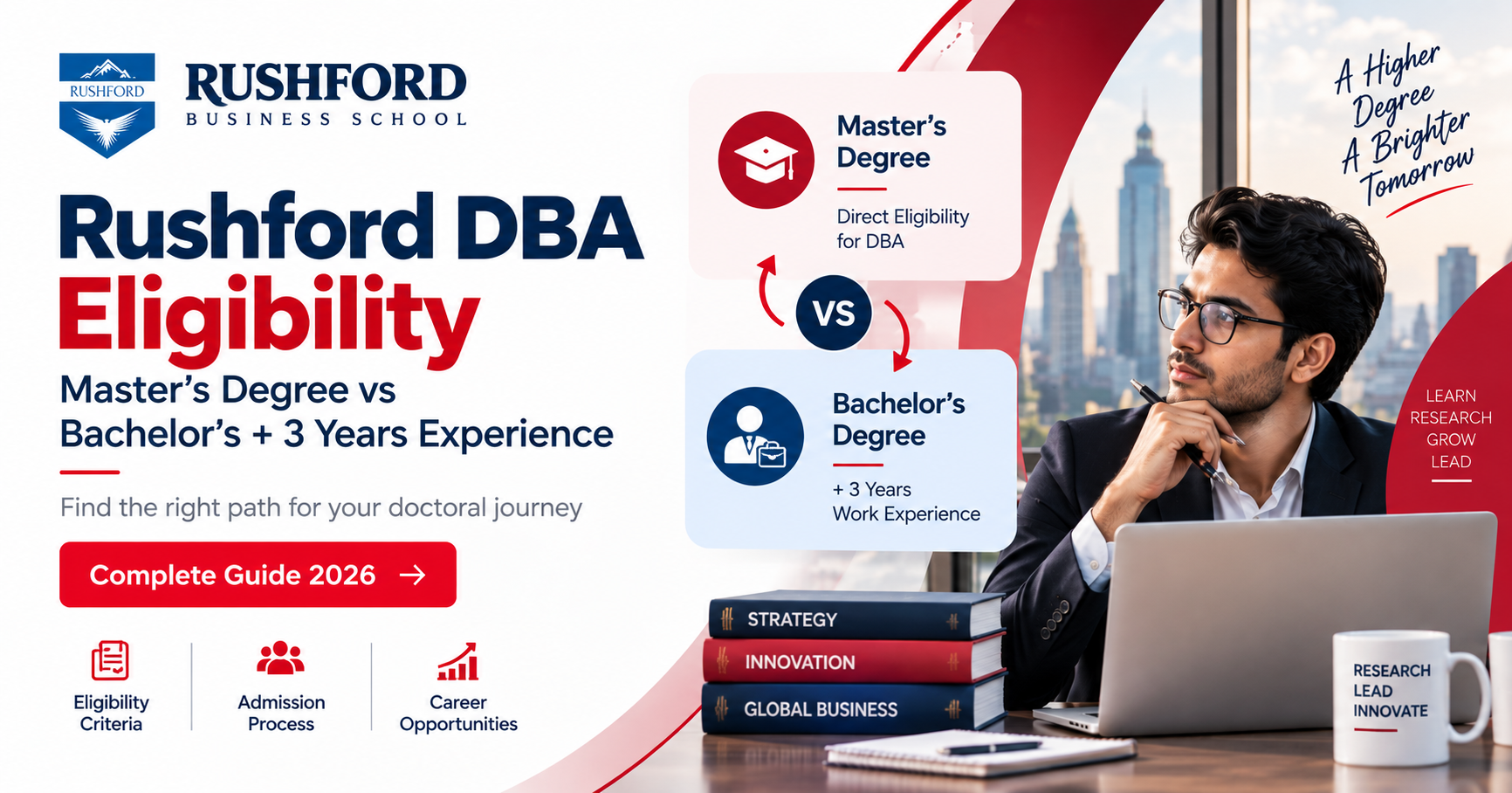
- A recognized Master’s degree or equivalent qualification.
- A strong academic background.
- Relevant professional or managerial experience.
- Interest in business research and leadership development.
Some admission pathways may also consider candidates with extensive professional experience and strong academic credentials.
Applicants are typically required to submit academic documents and professional information during the admission process.
Step-by-Step Admission Process
Research the Program
The first step is understanding the DBA structure, specializations, curriculum, and learning format.
Candidates should evaluate whether the program aligns with their career goals and professional interests.
A clear understanding of the program helps applicants make informed educational decisions.
Prepare Required Documents
Applicants generally need to prepare educational certificates, academic transcripts, professional resumes, and identification documents.
Having these materials ready can help simplify the admission process.
Submit the Application
Once eligibility requirements are met, candidates can proceed with the application process.
The application typically includes personal information, educational background, and professional experience details.
Accurate and complete information improves the application review process.
Admission Review
The institution evaluates applications based on academic qualifications, professional experience, and overall suitability for doctoral studies.
Some candidates may also be required to participate in interviews or academic discussions as part of the evaluation process.
Enrollment and Program Start
After successful admission, students can complete enrollment formalities and begin their doctoral journey.
The learning process generally includes coursework, research activities, business projects, and doctoral thesis development.
Learning Structure of the DBA
One of the main reasons professionals choose the Rushford DBA is flexibility.
The program is designed to support working professionals who want to continue their careers while pursuing higher education.
Students typically engage in advanced business studies, leadership development, research methodologies, and specialized business topics.
Another important component is doctoral research.
Students explore business challenges, analyze organizational issues, and develop research-based solutions that contribute to professional practice.
This practical approach makes the DBA highly relevant for industry professionals.
Popular DBA Specializations
Professionals can often choose specializations that align with their career goals and industry interests.
Common areas of focus include:
- Leadership and Management
- Entrepreneurship
- Marketing
- Finance
- Human Resource Management
- Operations Management
- Innovation Management
- Strategic Management
Selecting the right specialization can help students develop expertise in areas that support long-term career growth.
Benefits of Pursuing a DBA from Rushford Business School
One of the biggest advantages of the program is flexibility.
Professionals can continue managing careers, businesses, and personal responsibilities while pursuing doctoral education.
Another major benefit is leadership development.
The DBA helps professionals improve strategic thinking, business research expertise, and executive decision-making capabilities.
The program also supports professional credibility and lifelong learning, helping individuals remain competitive in evolving business environments.
For many professionals, the DBA becomes a valuable investment in long-term career development.
Career Opportunities After Completing the DBA
A DBA can support career advancement across various industries and leadership functions.
Graduates often pursue opportunities in executive management, business consulting, entrepreneurship, strategic planning, organizational development, and leadership positions.
The qualification can also support professionals seeking board-level responsibilities and senior decision-making roles.
For entrepreneurs, the DBA can provide valuable insights into business growth, innovation, and organizational strategy.
As organizations increasingly value research-driven leadership, professionals with DBA qualifications continue to remain highly competitive.
Future Scope of DBA Programs in 2026
The future scope of DBA education looks highly promising because organizations increasingly require leaders who can combine professional experience with advanced business knowledge.
Businesses today prefer professionals who understand leadership, innovation, strategy, and evidence-based decision-making.
As industries continue evolving and becoming more competitive, demand for highly qualified business leaders is expected to grow significantly.
This makes a DBA one of the most valuable qualifications for experienced professionals seeking long-term career advancement.
Conclusion
Pursuing a DBA from Rushford Business School can be a valuable step for professionals who want to strengthen leadership expertise, business research capabilities, and executive-level decision-making skills.
The program offers a flexible pathway for experienced professionals to achieve doctoral-level education while continuing their careers.
With its focus on practical business applications, leadership development, and organizational problem-solving, the DBA can support long-term professional growth and career advancement.
For managers, entrepreneurs, consultants, and business leaders looking to enhance their professional credibility and future opportunities, the Rushford DBA can be a worthwhile educational investment in 2026.
FAQs
1. Who can apply for a DBA at Rushford Business School?
Professionals with a recognized Master’s degree and relevant professional experience can generally apply.
2. Is the DBA suitable for working professionals?
Yes, the program is designed to support professionals who want to continue working while pursuing doctoral education.
3. How long does it take to complete a DBA?
The duration varies depending on the program structure, but most DBA programs take approximately 2–3 years or more.
4. What skills can students develop during the DBA?
Students improve leadership expertise, strategic thinking, business research capabilities, problem-solving skills, and executive decision-making abilities.
5. Does a DBA help with career growth?
Yes, a DBA can support leadership opportunities, professional credibility, executive-level advancement, and long-term career development.